
Searching the Cobb County Court Docket
Every Cobb County docket search starts with one question: which court holds the case? State Court runs its records through CourtConnect. Superior Court uses a separate Web Case Management system plus its own calendar library. Magistrate Court keeps small claims, garnishments, dispossessory matters, and warrants under yet another search. Probate, Juvenile, and the city municipal courts each maintain files of their own. A ticket written on a Cobb County road can still belong to a city court.
Before you type anything, gather a party name, case number, citation number, or filing date. One name alone may return several parties or a stale record. Match the court and the case type. Check the filing date, party role, and status too. Only then trust a row as your case. The steps that follow keep a docket search pointed at the right court and the right record.
- Identify the court from the case type, issuing city, calendar heading, or number pattern. A felony or domestic case usually points to Superior Court, while a county misdemeanor or traffic case points to State Court unless a city court issued the citation.
- Open the official search route for that court. Choose Civil Cases or Criminal Cases in State Court CourtConnect, select the case type in the Magistrate search, or use the Superior Clerk's Web Case Management and calendar pages.
- Search by case number or citation first. If that is not available, add a last or company name, first name, middle name, filing-date range, case type, or the criminal birth-year field when the form allows it.
- Read the result in layers. Separate the case header, parties, Case Events, Case Dockets, documents, offense or claim fields, financial status, and disposition instead of treating one status word as the whole case.
- Use the named clerk when the online row does not answer the question. The clerk can explain inspection, copy, payment, and access procedures, but the official record and any later court order control the legal meaning.
Cobb County Court Docket Search Fields
CourtConnect, run by Cobb State Court, is the main online tool for State civil, traffic, and misdemeanor records. Its coverage has firm start dates. Civil cases reach back to March 17, 1997. Traffic and misdemeanor cases begin April 26, 1999. The system refreshes from the case-management system nightly. A citation or filing may just have landed. Give it a day before you expect it in a Cobb County docket search.
The form splits civil from criminal. It offers more ways in than a name alone. There is a phonetic option for first and last names. A birth-year field covers criminal cases. You can also use filing-date limits, a case number, or a school-bus citation or tag field. A reCAPTCHA guards the submission. Per the guide and disclaimer, a response is capped at 5,000 records. Bulk downloads or URL mining are barred. Narrow beats broad here.
The Cobb State Court overview lists CourtConnect alongside clerk, calendar, traffic, and filing services. That page orients you to the State Court route. It does not replace the live docket search or the official clerk file, which always controls.
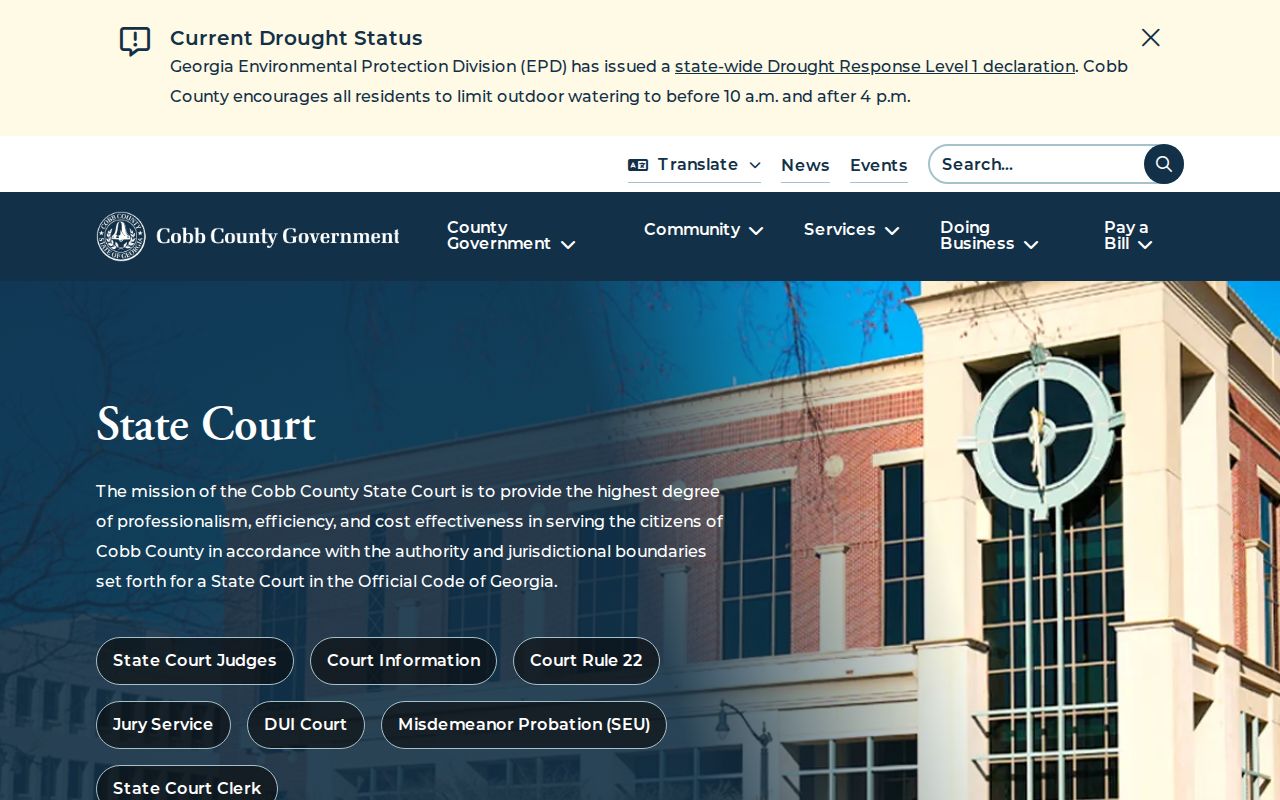
Keep a Cobb County docket result in context by checking the court and clerk names attached to that route. State Court is only one corner of the picture. Superior, Magistrate, Probate, Juvenile, and city records each live in a separate search universe.
| Field | Type | What It Does |
|---|---|---|
| Case mode | Required choice | Switches between Civil Cases and Criminal Cases. |
| Name and phonetic | Text and checkbox | Uses last or company, first, and middle names; phonetic search applies to first and last. |
| Criminal birth year | Four-digit text | Narrows a criminal search when the year is known. |
| Filing dates | Date range | Limits the beginning and ending case-filing dates. |
| Case number | Text | Searches a known local number such as 24-A-12345. |
| Citation and tag | Text | Handles the school-bus citation or tag fields described by the guide. |
| CAPTCHA | Required challenge | Confirms the form submission before results are returned. |
From the results list you can open Case Details and Documents. The detail view can show events, parties, docket entries, offenses, sentence fields, and financial values. One caution applies. Addresses and other party details belong in the file, not in any public retelling. A record can look stale. The online display may be incomplete. The State Clerk's official record controls.
Inside a Cobb County Court Docket
A Cobb County court docket is a running record, not a verdict slip. Portals break it into layers. A case header comes first. Then an event layer, a party layer, docket entries, document links, and outcome or financial fields. One case can carry a scheduled hearing, a filed motion, a payment entry, and a later disposition all at once. Read each item with its date, court, and label.
Calendars and docket entries answer different questions. An event row might give you a judge, room, date, time, and event status. A docket entry records a filing description and its entry time. The document image or order often holds the full ruling. A case may be marked complete, paid, inactive, or dropped from a calendar. Even then, check the court's disposition field and its document history before anyone draws a legal conclusion.
| Case header | Case ID, style or description, filing date, case type or division, status, related cases, and any balance field. |
|---|---|
| Parties | Sequence, association or role, name type, aliases, expiration or end date, and address fields that should be handled with care. |
| Case Events | Event name, date and time, room, location, judge, and event status for scheduled or recorded activity. |
| Case Dockets | Entry description, filing or entry date and time, and sometimes a document or image link. |
| Offenses or claims | Offense or claim number, date, code or class, description, and disposition fields where the portal supplies them. |
| Disposition and sentence | Disposition date, disposition wording, fine, sentence length, suspended or served fields, and signed-date details when available. |
Reading a Cobb County court docket takes care. A few short labels carry narrow meanings. In a State Court traffic case, “PAID IN FULL” only reports the payment status. That label alone tells you nothing about guilt, innocence, or a dismissal. “CASE COMPLETE - REMOVE FROM CALENDAR” is administrative housekeeping, nothing more. Over in a Magistrate civil record, “JUDGMENT BY DEFAULT” should be read alongside the service history. The order entered matters too. Keep the docket wording intact. Resist swapping it for a broad custom outcome of your own.
Cobb County Docket Terms
Cobb County portals lean on short labels that look plain but mean something narrow. Treat each one as a single record entry. Then check the event, filing, order, or disposition sitting around it. That context tells you what the entry actually did. These explanations reflect the State, Superior, Magistrate, and municipal views a Cobb County docket reader will meet.
- Arraignment
- A setting or entry where a criminal charge is addressed. It is not a final finding.
- FTA
- Failure to appear. An FTA entry or 30-day notice is a court event, not proof of conviction.
- JTC
- Jury Trial Call in a Superior calendar file. The Clerk currently describes those PDFs as Trial Status Calendars.
- FiFa
- A fieri facias or execution-related entry in a Magistrate civil record. Read whether it was requested, created, issued, or later satisfied.
- Bound over
- A transfer from one court level to another, such as a warrant or misdemeanor matter moving toward Superior jurisdiction.
- Disposition
- The court's result field or order, which is stronger than a charge, calendar setting, payment line, or case status alone.
Other Cobb County docket labels take the same care. “ADMIN TRFD TO SUPERIOR COURT” is a transfer entry, nothing more. “NOTICE OF HEARING PRODUCED” means notice went out, not that a hearing happened. And “CIVIL PAID” just records payment. For the fuller record, turn elsewhere. Use the case detail, the docket document, or the named clerk.
Courts That Keep Dockets in Cobb County
Court identity comes first in a Cobb County docket search. Superior Court is the general-jurisdiction trial court. It holds felony criminal cases, domestic relations, equity and title disputes, and broad civil matters. State Court is a separate trial court with its own county civil, misdemeanor, and traffic calendars. Magistrate Court runs a public search. It covers small claims up to $15,000, garnishments, dispossessory matters, bad checks, abandoned vehicles, warrants, and preliminary work.
Probate, Juvenile, and the municipal courts sit outside any countywide database too. Probate keeps estates, wills, guardianships, conservatorships, and license records. Juvenile access rules are tighter. It holds dependency, delinquency, unruly, and juvenile-traffic records. Each city court keeps the citation or ordinance record for that city. Start your routing with the Cobb County court directory. It lists the courts and points each type of court record to the right office.
That directory view shows the routing problem plainly: pick the court before you search a name. It is a directory, not a full docket index.
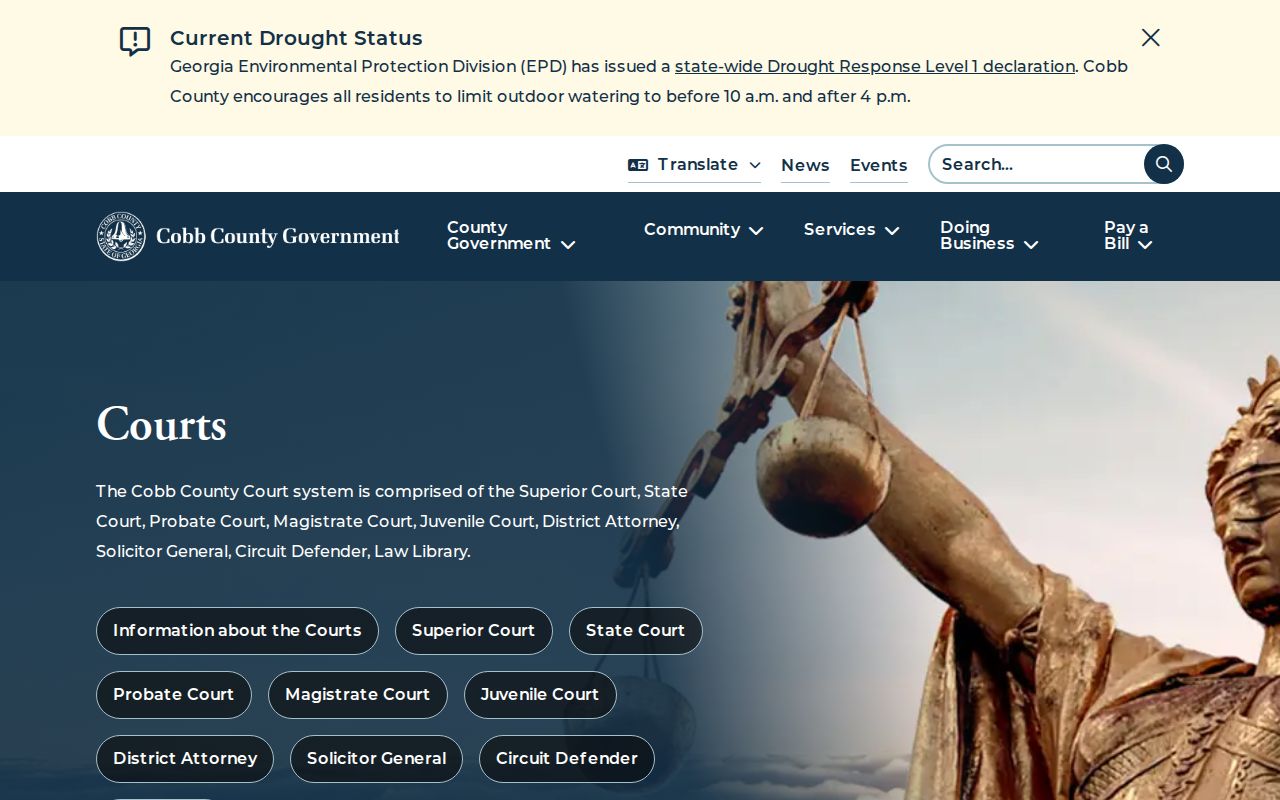
The split among courts trips people up in predictable ways. A city traffic question goes to the city court, not State Court. Likewise, the State Court form is the wrong tool for a small-claims or dispossessory record, which belongs to Magistrate.
| Court | Docket Covers | Where to Search |
|---|---|---|
| Superior Court | Felony, domestic, equity and title, broad civil, orders, and Superior calendars. | Superior Clerk Web Case Management, calendar PDFs, public terminal, or Clerk. |
| State Court | County civil, misdemeanor, traffic, and State Court calendars. | CourtConnect, State Clerk, or the State Court counter. |
| Magistrate Court | Small claims, garnishment, dispossessory, bad checks, warrants, and related matters. | Magistrate Judicial Records Search, eFlex for authorized filing, or 32 Waddell counter. |
| Probate Court | Estates, wills, guardianships, conservatorships, and licenses. | Probate case-status and records route or Probate Clerk. |
| Juvenile Court | Dependency, delinquency, unruly, and juvenile traffic. | Juvenile Clerk and restricted records channel. |
| Municipal courts | City ordinance, traffic, environmental, and specified city matters. | The municipal court of the city named on the citation. |
| Federal courts | Northern District, Bankruptcy, and Eleventh Circuit matters. | PACER, CM/ECF, or the federal Clerk, not a Cobb county portal. |
Magistrate Court brands itself the "People's Court" and runs several distinct divisions. The official Magistrate Court page lays out its jurisdiction and the counter route for its records.
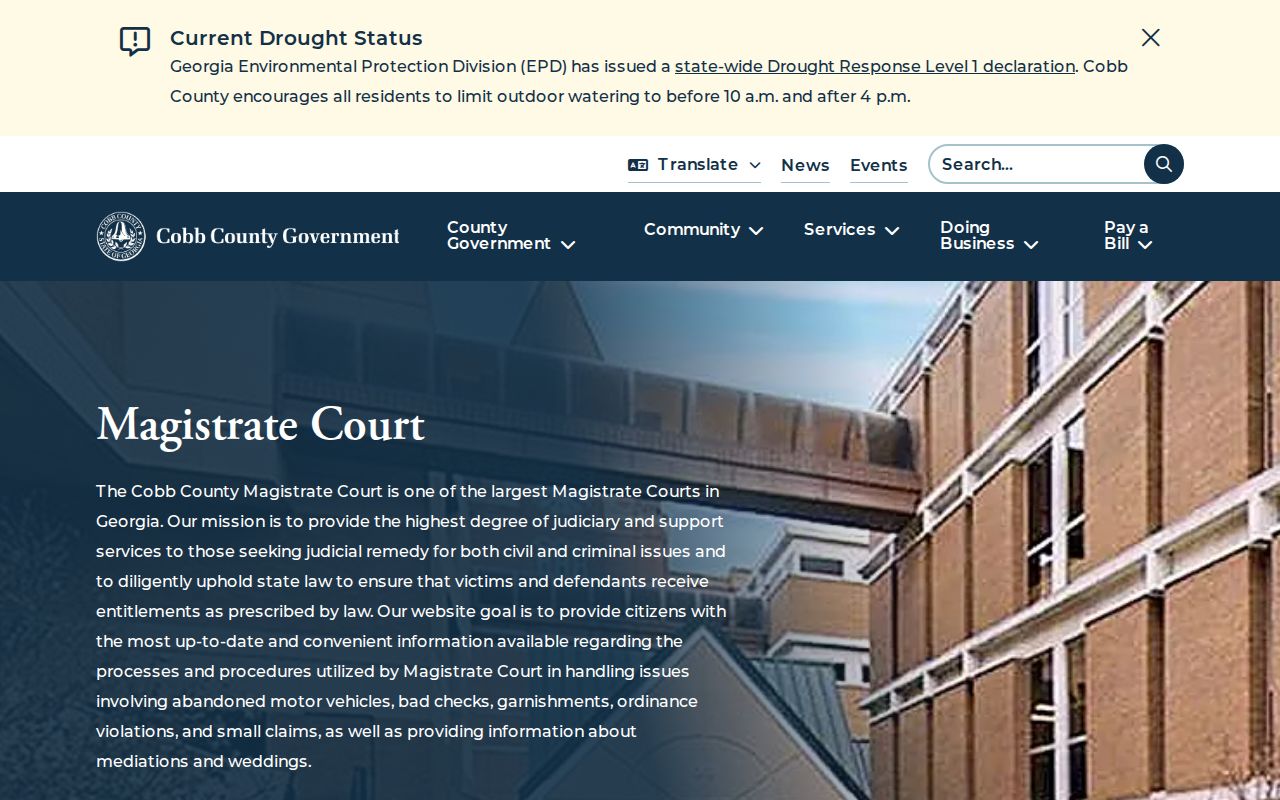
A Magistrate record can hold service, hearing, answer, default, payment, FiFa, or transfer entries. Treat a Magistrate warrant record as what it is, not as a full Superior criminal case.
Cobb County Case Docket Numbers
A case number can steer a Cobb County docket search. But treat it as a clue. It is no universal code. State Court guidance shows a format like 24-A-12345. Superior civil instructions use formats such as 17102331 and 17-1-2331. A Superior calendar identifier may add a court type, sequence number, and judge initials. Magistrate examples pair a year with a type letter. A warrant record often carries a W-style clue.
Federal numbers follow a different grammar entirely. The Northern District example 1:26-cv-04546-VMC-LRS encodes a federal civil case, its division, year, sequence, and judge or magistrate initials. It will never surface in CourtConnect or a Cobb County Clerk search. Check every pattern in the portal. Confirm with the clerk's office too. Never read a number as a legal interpretation on its own.
The Cobb Superior Court page identifies the court behind Superior records and its public services. Its courthouse view also helps here. You can tell Superior Court apart from the neighboring State, Probate, and Magistrate offices.
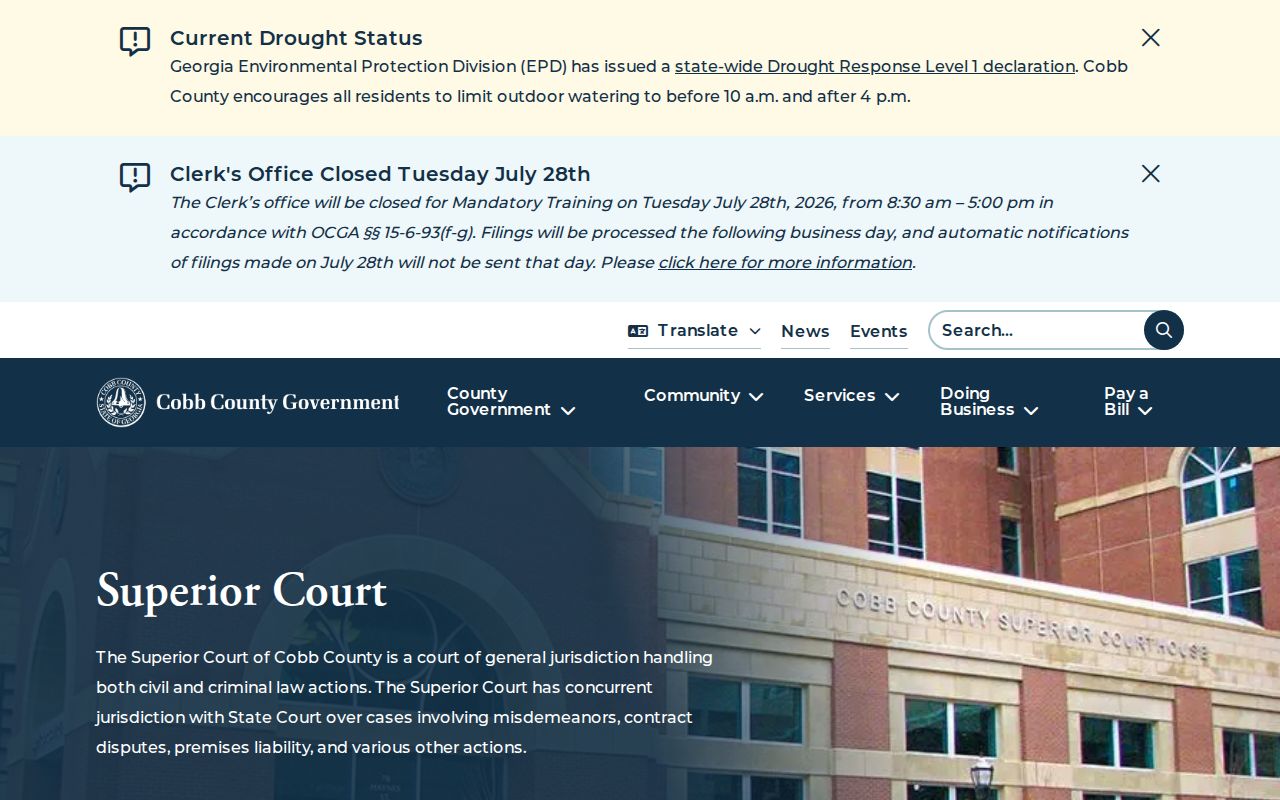
A number that returns nothing is rarely a dead end. Check the punctuation first. Then check the court level and the filing year. Did the case begin in a city court, Magistrate, or as a warrant matter? A transfer may have created a new number in the receiving court.
How to Find Court Dates and Settings
Cobb County court dates live in several places. The Superior Clerk publishes criminal, civil, domestic, TPO, sentencing, trial-status, motion, bond-forfeiture, and other calendar PDFs. State Court posts division and date calendars. It warns that settings can shift as a case moves. City calendars are local: Mableton's 2026 schedule lists virtual arraignment and compliance dates, Marietta publishes a session calendar, Smyrna separates traffic and environmental sessions, Kennesaw holds court each Tuesday, and Acworth links a vendor calendar.
Remember what a calendar row is. It shows a scheduled event, not proof the hearing happened or the case ended. Read the date, time, courtroom, judge, case number, cause or offense, party role, attorney role, and status. The Superior Clerk notes a title change. Files titled Jury Trial Call Calendars now function as Trial Status Calendars. That wording matters, since a listed case may still settle, continue, transfer, or drop off.
Know the court and case number. The full path is on Cobb County Court Dates. For a live setting, confirm with the named clerk shortly before you appear. A static PDF can lag behind the current case event.
Docket flow: Case number or citation › court calendar or Case Events › clerk confirmation › hearing, reset, or later disposition.
Cobb County Court Calendar Changes
A reset or continuance changes the next event without erasing earlier docket entries. Mableton's 2026 materials set a deadline. A reset request should come at least two business days before court, with approval case-by-case. Acworth calls the citation date the arraignment date and explains a one-month continuance process. State Court mails changed traffic dates. Rules like these are why any calendar search should end with clerk confirmation.
Scale shapes what you see, too. Marietta budget material reports big numbers. A prior fiscal-year table lists 12,534 traffic or local-ordinance citations issued, 8,258 cases filed, 435 non-jury trials, and 8,749 cases disposed. Smyrna's FY26 budget lists two traffic-court days each week. Each day has two sessions, and dockets average about 75 cases. Those numbers describe workload, not the status of your case.
Pull the current PDFs from the Superior Clerk calendar library. Then compare the calendar against Case Events, Dockets, and the filed documents. A trial-status label on a public PDF is still not a verdict.
Public Access to Court Dockets
Public access in Georgia starts with whoever holds the record. It is not one countywide office. The Georgia Open Records Act can back a request for an existing, identifiable filing. What it cannot do is make the County Attorney a docket keeper for every court. A filed court record stays with the Clerk who received it. Cobb State and Magistrate search pages carry their own caution. Online information may be incomplete or not current. The official record at the Clerk's office still controls.
Key Rules:
O.C.G.A. § 50-18-70 et seq. sets Georgia's public-records framework and its exemptions.
O.C.G.A. § 50-18-71 directs a written request to the custodian and calls for a basis when records are withheld.
Uniform Superior Court Rules 21 and 21.6 set a public-access baseline and address sealing and protected identifiers.
Uniform Municipal Court Rule 11 supplies a municipal-court access and recording framework subject to statute and court order.
For county-held administrative records, policies, archived calendars, and other existing papers, use the Cobb Open Records Center when the responsible custodian points you that way. Name the court, the department, the date range, and the exact record sought. One thing a request cannot do is ask the county to build a fresh personal-history compilation from scratch.
Cobb County Restricted Court Dockets
A court can be public and still hold back pieces. Sealed filings, redacted fields, and restricted case types all exist in Cobb County. Juvenile dependency, delinquency, unruly, and juvenile-traffic records sit outside the ordinary public-name search. Probate portals conceal sensitive information. A domestic or protective calendar does not open every address or exhibit. Even Federal PACER can show a docket event while withholding the document behind it. The Cobb Probate Court page marks out its own separate court and record path. Its official page routes estate, license, and image choices through distinct channels. Those channels differ from State and Superior searches.
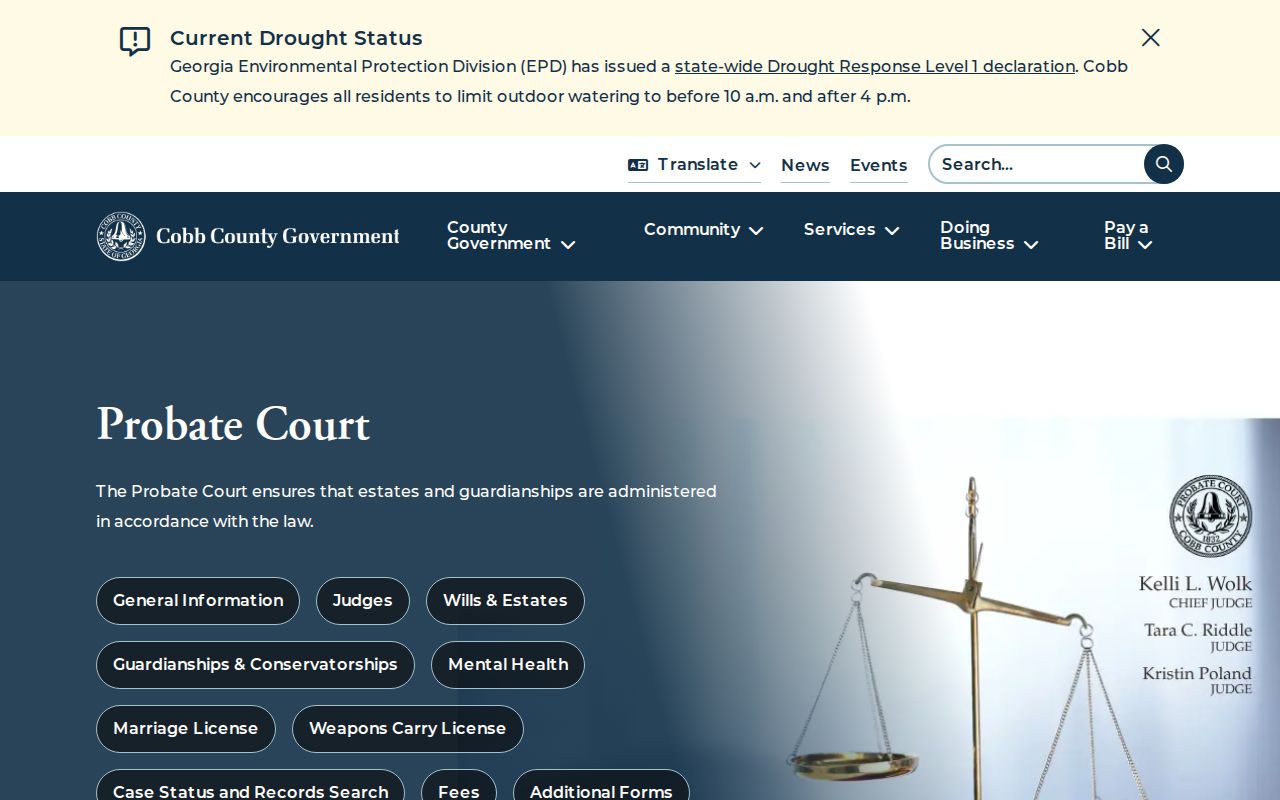
Probate's case-status route needs no login for the docket and record views it makes available, while concealing sensitive details. A missing image proves nothing. The case or filing may still exist. Juvenile access runs narrower. The Cobb Juvenile Court page lays out the court's jurisdiction and location. Its clerk's records unit steers attorneys of record with an Entry of Appearance to a controlled document channel, a reminder that this custodian stands apart from the rest.
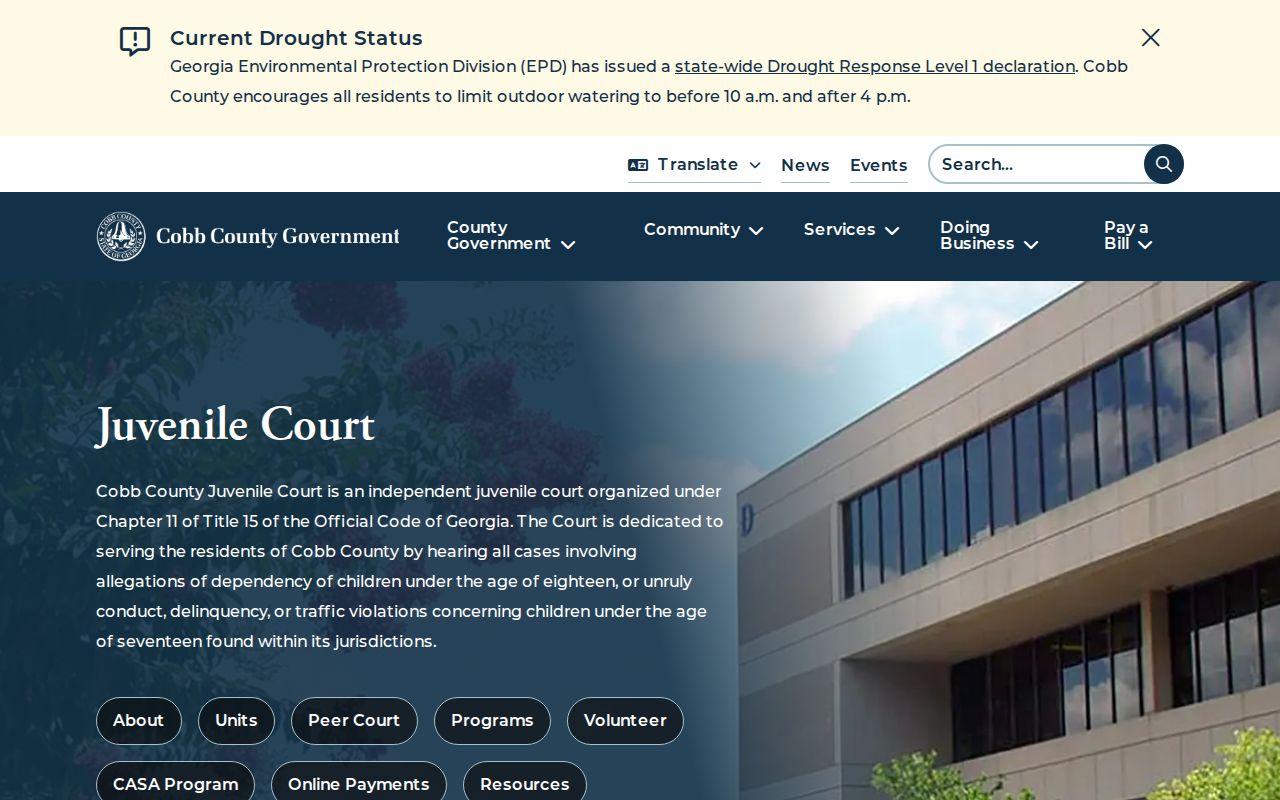
When a document is missing, call it what it is: not displayed in the public portal. Ask the named Clerk which rule, order, or access process applies. Never read a seal into a broken link or a session-specific detail URL.
Docket Records at the Clerk’s Office
Cobb County splits its custodians, so "the county clerk" is never one universal answer. Connie Taylor heads the Clerk of Superior Court. That office holds Superior civil, domestic, felony criminal, orders, dockets, calendars, and land records. Tahnicia Phillips leads the Clerk of State Court. It keeps State civil, misdemeanor, traffic, calendars, and filings. Magistrate, Probate, Juvenile, and municipal courts each keep their own record sets. The Clerk's staff can walk you through inspection, copying, payment, and filing. They cannot hand out legal advice, though, or merge separate systems into one report. Give the office the court. Give it the case or citation number, the date range, and the exact record you need. A counter visit, public terminal, phone call, mail request, or online portal may each answer a different slice of the question.
Clerk of Superior Court
70 Haynes Street, Marietta, GA 30090
770-528-1300
Superior civil, domestic, felony, calendar, and land-record routing.
Clerk of State Court
12 East Park Square, Marietta, GA 30090
770-528-2660
State civil, misdemeanor, traffic, and CourtConnect assistance.
Magistrate Court
32 Waddell Street, Marietta, GA 30090
770-528-8900
Small claims, dispossessory, garnishment, warrant, and related records.
That office split is the practical heart of Cobb County docket access. Send a request to the wrong clerk and it may bounce back. Identify the record type first. It saves a trip and keeps your docket search out of the wrong database.
Cobb County Court Record Routes
A docket index is only one channel among several. Superior records can be reviewed through Web Case Management, public terminals, the Clerk counter, mail, or the eCertification service. The Superior Clerk's current copy page lists mail and in-person options. An older Services page prices copies with a different per-page and certification structure. The two official schedules do not match on every line. So confirm the live amount before you send payment. For a Superior mail request, identify the record in writing. Include advance payment by an accepted method. Add a delivery address and a self-addressed stamped envelope. The mail route is Clerk of Superior Court, Court Division, P.O. Box 3370, Marietta, GA 30061. State and Magistrate pages lean on inspection and clerk routing. They offer no one universal public-copy fee table.
| Superior record | Regular mail | Certified mail |
|---|---|---|
| Final divorce decree | $3 | $10 |
| Final divorce decree with settlement agreement | $9 | $24 |
| All civil documents | $3 | $10 |
| All criminal documents | $3 | $8 |
| Criminal disposition package | $5 | $14 |
The Superior Clerk's eCertification page links to a secure service producing tamper-proof, self-validated certified court-record PDFs. The service covers court records, not real estate. Some agencies may still insist on an in-person certificate. Land, deed, lien, plat, and instrument searches run through the Real Estate Division and the Landmark system, not the ordinary civil docket.
Cobb County Courthouse Docket Access
Four buildings, four record systems. Cobb County's courthouse cluster sits within a few blocks. Even so, each office keeps its own dockets. Superior Court and its clerk are at 70 Haynes Street. State Court sits at 12 East Park Square. Magistrate, Probate, and Juvenile share 32 Waddell Street. The Real Estate Office is at 10 East Park Square, Building C. Show up at the wrong counter, and the staff there may never touch the file you need.
Superior and State pages post normal weekday hours. The Superior Clerk's own court page lists a counter window that differs from the broader court administration listing. Call the office you plan to visit before any time-sensitive copy trip. Cobb publishes no single consolidated parking, security, or accessibility page. The federal Atlanta courthouse, meanwhile, carries separate identification and security rules. It is not a Cobb County courthouse.
Start with the official courts directory when you need a counter address and phone. Online terminals, drive-through service, mail, and in-person inspection each handle different transactions. A drive-through announcement for State and Magistrate Clerk services does not mean everything happens from a car. A filing, docket inspection, or certified copy may still require a visit.
Cobb County Federal Court Dockets
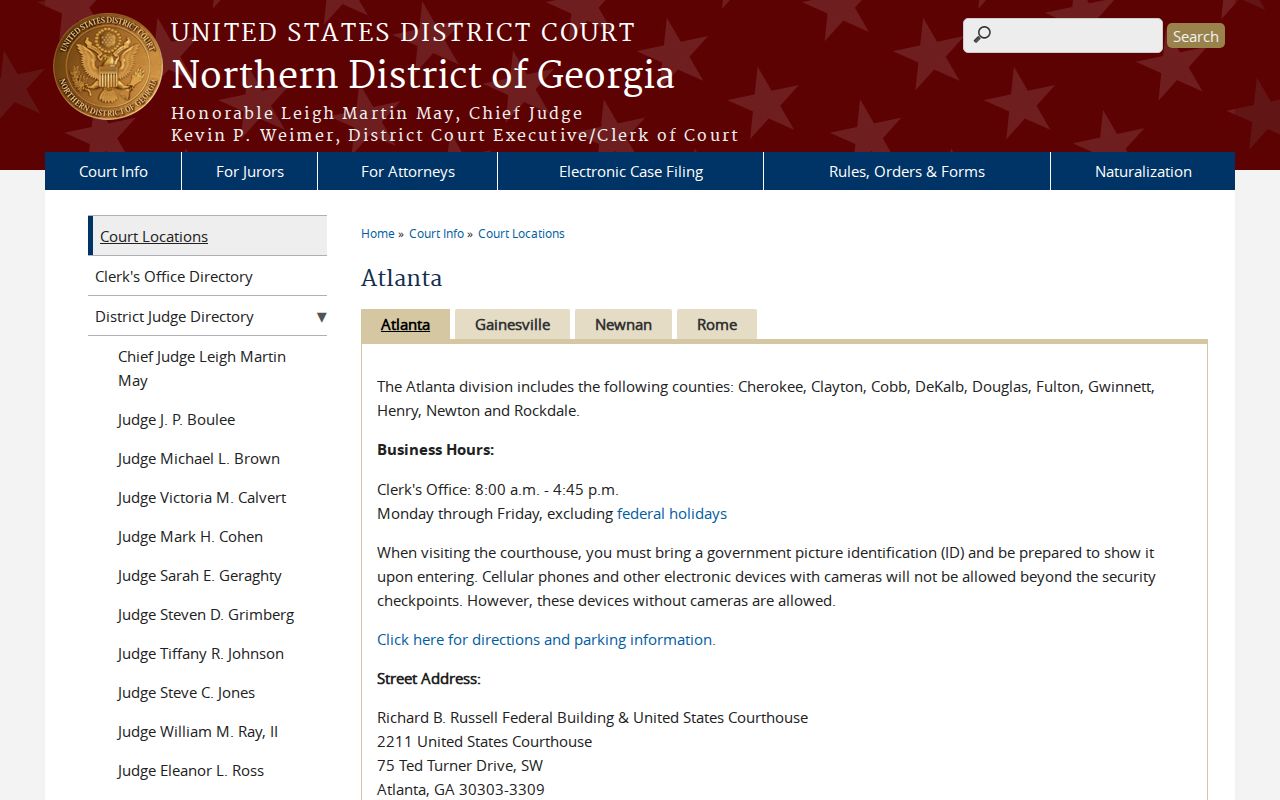
A case tied to Cobb County can still belong to a federal court. The Northern District of Georgia's Atlanta Division covers Cobb. Its public docket access runs through PACER. The Bankruptcy Court's Atlanta page also lists Cobb among the counties served. None of those dockets appear in CourtConnect, Superior Web Case Management, or a city vendor. No Georgia county clerk search shows them either. Check the court label before trusting a result. It should say Northern District, Bankruptcy, or Eleventh Circuit rather than simply Cobb County. The Northern District Atlanta division page is the official source for the federal venue and security route. It shows a courthouse entirely separate from the Cobb cluster.
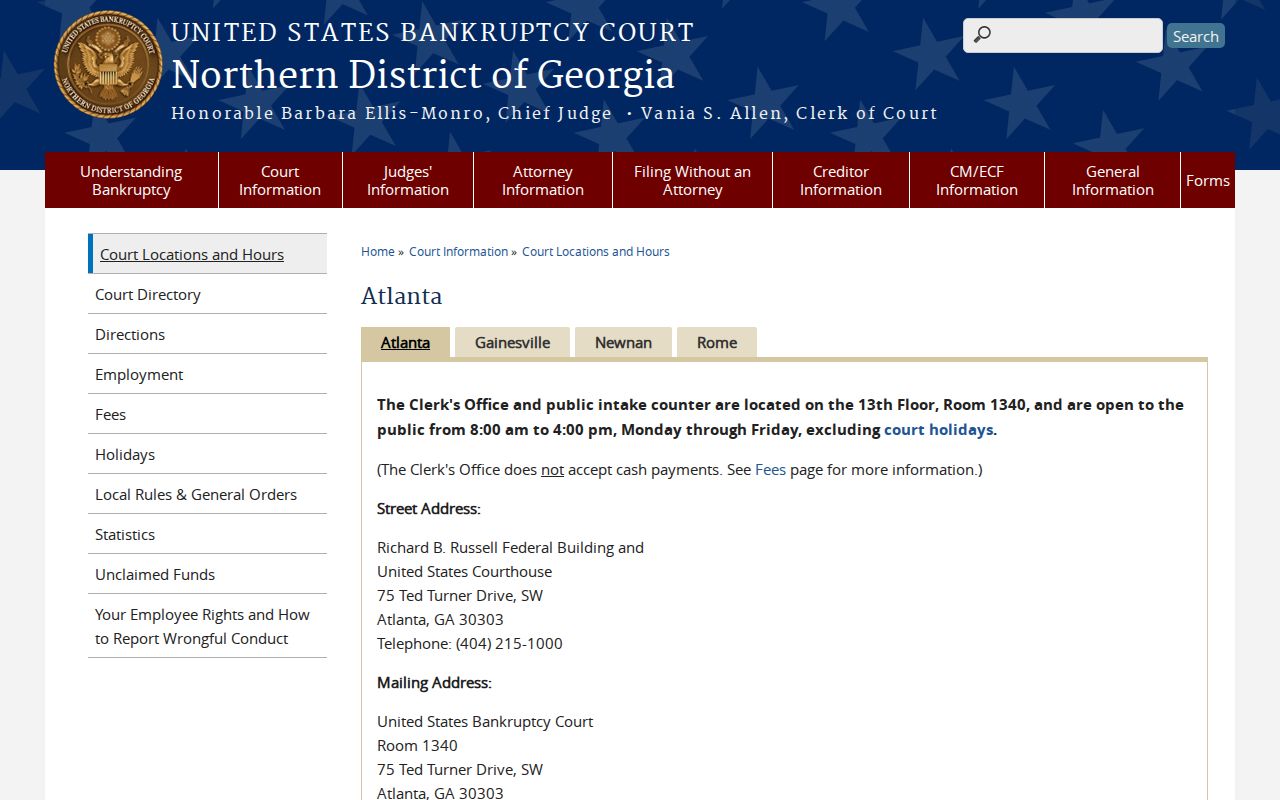
Bankruptcy runs through its own court. The official Atlanta Bankruptcy Court page describes the public intake counter and points to PACER plus the free MCVCIS phone system.
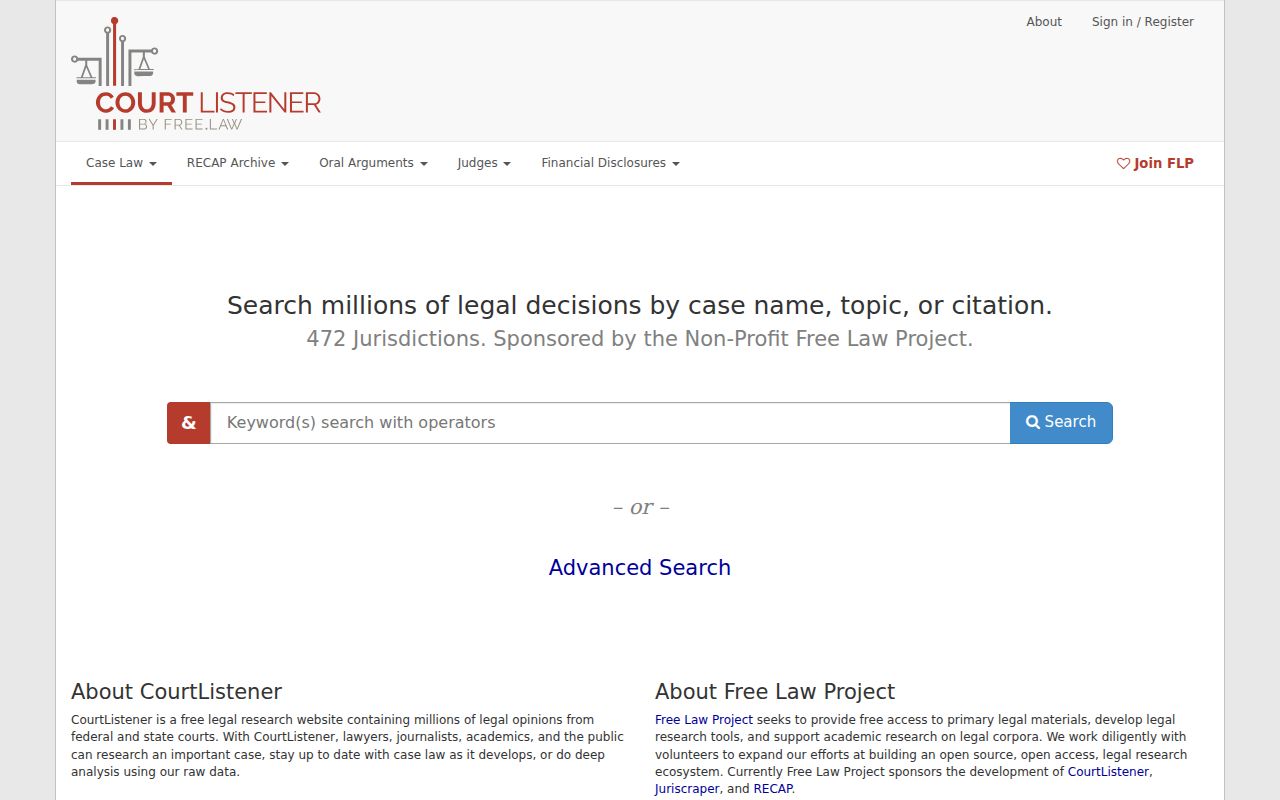
PACER lets you search a specific court. You can also search a case number, a party name, or the nationwide locator. The Eleventh Circuit uses a date split. Older and newer appeal dockets land on different sides of that line. CourtListener and RECAP help when a free copy already exists. PACER stays the federal access authority. The CourtListener interface offers a different view of federal opinions and RECAP material. Treat it as a convenience layer. It does not replace a current official docket.
Federal cases play by federal rules. Case numbers, document access, sealed filings, and account charges all follow those rules, so keep the branch separate when a Cobb County search starts with a federal complaint, bankruptcy petition, or appeal.
Cobb County Court Dockets by City
Municipal courts keep city-level records: traffic, ordinance, environmental, and specified state-law matters. The issuing city matters more than the road. Mableton's court began after the city incorporated in November 2022. Marietta, Smyrna, Kennesaw, and Acworth each publish their own court, calendar, payment, or records route. Watch for transfers. A city case that moves to State or Superior Court gets a county case number. That number becomes your next search key.
The city ranking has an official source. It is the Cobb comparison document dated April 14, 2025. Its figures are the population values that source reported, not a new Census estimate. Each card routes to a city-specific docket search.
Mableton Docket Search
78,000 in the cited 2025 comparison. Municipal court, JusticeOne, and virtual calendar route.
Marietta Docket Search
62,769 in the cited 2025 comparison. Seven municipal divisions and SAGES records route.
Smyrna Docket Search
56,566 in the cited 2025 comparison. Traffic, environmental, payment, and disposition routes.
Kennesaw Docket Search
34,683 in the cited 2025 comparison. Weekly Tuesday municipal court route.
Acworth Docket Search
22,379 in the cited 2025 comparison. CourtWare docket fields and city clerk route.
City cards open a door, not a database guarantee. No rule says every municipal court offers a public name search. For a local ticket or ordinance case, the right next step may be a city clerk, a calendar, a citation page, a payment vendor, or a records request.
Map and Directions to the Cobb County Superior Court Clerk
Superior Court civil, domestic, felony criminal, and land-record files are kept at 70 Haynes Street in downtown Marietta, the Superior Clerk's building. The Marietta courthouse cluster is compact but split: State Court sits at 12 East Park Square, and Magistrate, Probate, and Juvenile share 32 Waddell Street, so a Superior file will not be found at those addresses. The Law Library is on the fourth floor of the Haynes Street building.
Clerk of Superior Court
70 Haynes Street
Marietta, GA 30090
770-528-1300
Court administration 770-528-1800; general weekday hours 8:00 a.m. to 5:00 p.m., though the Clerk's own counter runs 8:30 a.m. to 5:00 p.m.
Because the Superior Clerk's posted counter hours differ from the broader court-administration listing, call ahead for a time-sensitive copy trip. Cobb has not published one consolidated parking, security-screening, or accessibility page for this courthouse cluster, so confirm entrance and elevator access with the destination office before arriving.